Computer Science Tutoring
- Home
- Computer Science Tutoring
Computer Science Tutoring That Connects Code, Theory, and Exam Marks
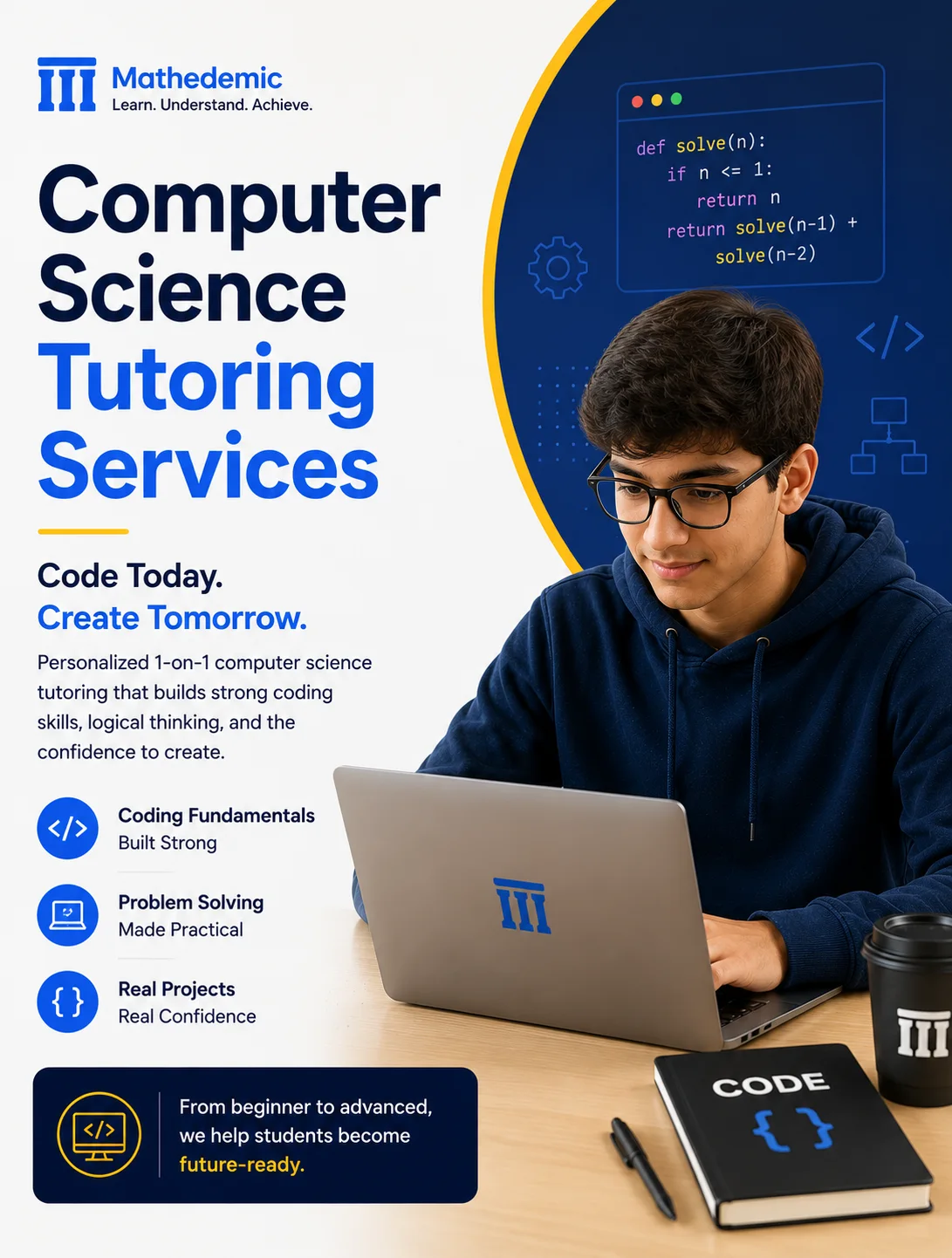
In a nutshell: We teach one to one online Computer Science aligned to your exam board, from first programs at GCSE through A Level, IB, and AP.
Sessions blend live coding, clear theory explanations, and past paper practice so your child can debug confidently and write the structured answers written papers demand.
Whether the priority is NEA or coursework support within school rules, SQL and networks catch up, or pushing toward top grades on algorithm heavy papers, tutors adapt examples and pace to the individual.
Topics We Cover
Content follows your specification and programming language. Below is a representative overview of what we teach most often; your tutor will adapt sequencing to NEA deadlines, school schemes of work, and upcoming assessments.
Programming & algorithms
Python, Java, or other board specified languages are taught from syntax and debugging through to searching, sorting, and efficiency thinking. Students write code live with their tutor, learn to trace execution, and fix errors systematically rather than guessing. Past paper programming questions are practised until structure and logic feel familiar.
Data structures
Arrays, lists, stacks, queues, trees, and related abstract types are explained with diagrams and small programs that make behaviour visible. We connect structures to the algorithms that use them so theory papers and practical tasks reinforce each other. Trace tables and memory sketches help visual learners retain detail.
Computational thinking
Decomposition, abstraction, pattern recognition, and algorithm design are core skills across GCSE, A Level, IB, and AP. Your child learns to break problems into steps, choose sensible data representations, and justify decisions in words examiners can mark. These habits support NEA planning as well as written papers.
Theory/architecture
CPU components, fetch decode execute cycles, memory, storage, binary arithmetic, and logic gates are taught with clear system diagrams. We link hardware ideas to the software stack so questions about performance and capacity make intuitive sense. Boolean algebra and truth tables are practised until fluent.
Databases & networks
Relational databases, SQL queries, normalisation, and entity relationship modelling sit alongside network topologies, protocols, and security basics required by UK and international specs. Students learn to read schemas, write correct queries, and explain how data moves securely across systems in exam style answers.
NEA/coursework & exam technique
Coursework and NEA support stays within your school rules while building genuine understanding of design, testing, and evaluation. For exams we drill trace tables, pseudocode conventions, long explain responses, and time management on mixed theory papers. Mark scheme language is taught explicitly so effort converts to marks.
Who Is This For?
Parents contact us when coursework stalls, theory marks lag behind programming, or mocks are approaching fast. Here is how we typically support Computer Science students.
Struggling students
When code never compiles or theory topics feel like memorising jargon, we slow down and rebuild with small programs and plain English explanations. Debugging becomes a shared habit, not a source of shame. Each session ends with a short list of what to review before the next lesson so progress feels steady.
On track students
For learners who pass lessons but lose marks on papers, we tighten written precision, SQL accuracy, and algorithm tracing under timed conditions. Sessions prioritise the topics your board repeats and the question styles that appear every year so mocks feel predictable.
Advanced students
Targeting top grades on A Level, IB Higher Level, or AP Computer Science A? We tackle unfamiliar problem scenarios, efficient algorithm choices, and synoptic questions linking theory to code. Extension work can include admissions style logic puzzles where it supports your goals.
Exam Boards & Year Groups
We are precise about what we offer so you know your child is preparing for the right papers, programming language, and assessment objectives, not a generic coding club syllabus.
| Qualification | Programmes / exam boards | Typical year groups |
|---|---|---|
| KS3 | Coding foundations, algorithms, and digital literacy | Year 7 to 9 |
| GCSE | OCR and AQA Computer Science | Year 10 and 11 |
| A Level | AQA and OCR Computer Science | Year 12 and 13 |
| IB Diploma | Computer Science Standard and Higher Level | DP Year 1 and 2 (ages 16 to 19) |
| AP (US) | AP Computer Science Principles and AP Computer Science A | Typically Grades 11 and 12 |
How We Teach Computer Science Online
We code together on the shared whiteboard, draw architecture diagrams, and walk through mark schemes for theory and programming questions step by step. Every line of code and every written point is explained as we go, so students can revisit the full reasoning from session notes or screenshots.
- Live coding on the shared whiteboard with tutor and student editing together, so debugging strategies are modelled in real time.
- Theory diagrams and trace tables built step by step, matching the conventions your exam board expects in written papers.
- Spaced recall on keywords and syntax between sessions, tracked so parents see programming confidence grow week by week.
Common Questions from Parents
We teach GCSE Computer Science with AQA, Edexcel, and OCR, plus A Level Computer Science with AQA and OCR. International options include IB Computer Science at Standard or Higher Level, Cambridge IGCSE, and AP Computer Science A or Principles. Tell us your programming language and NEA or coursework requirements at the demo.
Yes. Some students need debugging practice and clearer problem decomposition; others need theory topics such as networks, CPU architecture, or SQL. We split time between live coding on the whiteboard and structured notes for exam style questions so both practical and written papers improve together.
Most dedicated CS tutoring starts at GCSE in Year 10 and 11 and continues through A Level, IB, and AP in Years 12 and 13. KS3 coding enrichment can be arranged. Equivalent ages for IGCSE and international programmes are welcome.
Sessions use video call and a shared whiteboard or code editor view. Tutors write and debug code with your child, draw system diagrams, and walk through past paper mark schemes. For coursework or NEA, we follow your school's rules and focus on understanding and skill building within those boundaries.
Programming confidence grows with regular practice. Many students submit fewer blank homework files and debug more independently after several weeks of lessons. Theory recall improves with spaced quizzes. We share honest progress notes rather than guaranteeing a specific grade outcome.
Yes. Algorithm design, trace tables, logic gates, SQL queries, and pseudocode to match your board's conventions are standard teaching areas. We also prepare students for written papers that test theory separate from the programming project where applicable.
We match on language, board, and whether your priority is NEA support, theory catch up, or exam papers. Tutors have computing backgrounds and experience with the qualifications listed here. You can switch tutor after the demo if the fit is not right.
Pricing follows our standard tutoring plans by sessions per week and year group, from £80 or $80 monthly for two sessions. See the fee page for detail. The first demo is free with no payment required. WhatsApp is the fastest way to book.
Book a Free Computer Science Demo Session
Meet a specialist CS tutor, see the live coding workflow, and get a clear plan for the topics that matter most for your child's next assessment or NEA milestone.